From Crowns to Collectibles: The Enduring Legacy of Imperial Jewels in Modern Auctions
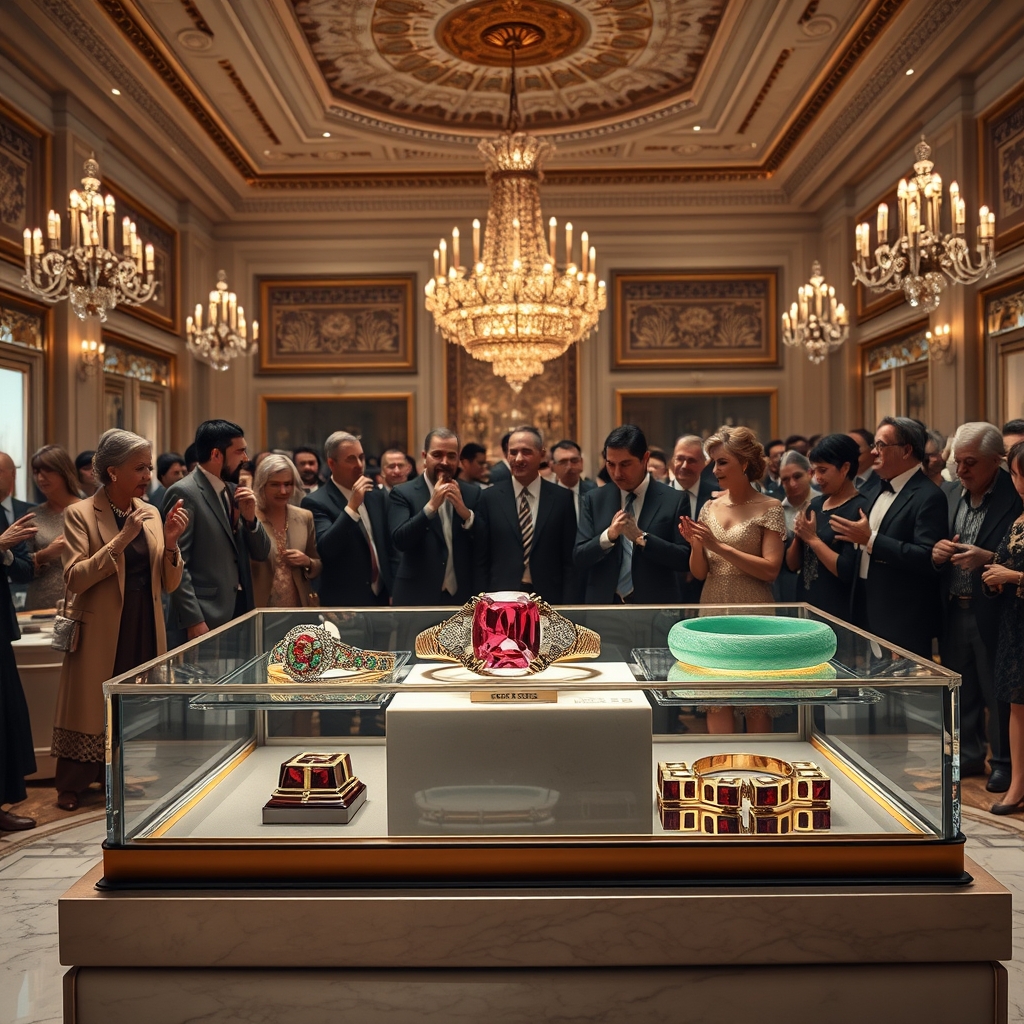
The world of high-stakes auctions has long been a stage for the extraordinary, where history, artistry, and opulence collide in a dazzling display of human craftsmanship. Among the most coveted lots are those with imperial provenance—jewels and artifacts once worn by royalty, now passing through the hands of collectors who recognize their unparalleled value. These pieces are not merely accessories; they are tangible links to the past, carrying stories of power, romance, and intrigue that transcend time.
The Royal Seal: Why Provenance Matters
In the realm of fine estate jewelry and rare gemstones, provenance is the golden thread that elevates a piece from beautiful to legendary. A diamond may sparkle, but a diamond once owned by a queen or emperor? That is a treasure with a narrative. Auction houses like Sotheby’s and Christie’s have built entire departments around verifying and showcasing the historical lineage of such items, knowing that collectors will pay a premium for the privilege of owning a fragment of history.
Take, for instance, the 2018 sale of the Bismarck Sapphire Necklace, a stunning Art Deco masterpiece that once belonged to Countess Mona von Bismarck. The necklace, featuring a 98.56-carat sapphire surrounded by diamonds, fetched over $27 million, a testament to its imperial allure. Similarly, the Duke of Windsor’s Jewels auction in 1987 saw fierce bidding wars over pieces once worn by the abdicated king and Wallis Simpson, with some items selling for more than 100 times their pre-sale estimates. These sales underscore a fundamental truth: provenance doesn’t just add value—it creates obsession.
The Rarity Factor: Colored Diamonds and Gemstones That Break Records
While diamonds are often celebrated for their clarity and brilliance, it is the rare colored diamonds that consistently shatter auction records. The Pink Star, a 59.60-carat internally flawless fancy vivid pink diamond, sold for a staggering $71.2 million in 2017, making it the most expensive jewel ever auctioned. But pink is not the only hue that captivates collectors. Blue diamonds, like the Oppenheimer Blue, have also commanded astronomical prices, with the 14.62-carat stone selling for $57.5 million in 2016.
Beyond diamonds, gemstones like imperial jadeite and natural pearls hold a special place in the hearts of connoisseurs. Jadeite, particularly the vibrant green variety prized by Chinese emperors, has seen prices soar in recent years. In 2014, a jadeite necklace once owned by Barbara Hutton sold for $27.44 million at Sotheby’s Hong Kong, setting a world record for jadeite jewelry. Meanwhile, natural pearls—once the exclusive domain of royalty—have become increasingly scarce, driving their value to new heights. The La Peregrina, a pear-shaped pearl with a history dating back to 16th-century Spain, sold for $11.8 million in 2011, proving that rarity is the ultimate luxury.
Art Deco and Beyond: The Timeless Appeal of Vintage Signed Jewelry
While imperial jewels and rare gemstones often steal the spotlight, vintage signed jewelry from iconic designers like Cartier, Van Cleef & Arpels, and Tiffany & Co. holds its own allure. These pieces, crafted during the golden age of jewelry design in the early 20th century, are celebrated for their innovation, craftsmanship, and enduring style. The Art Deco movement, in particular, produced some of the most sought-after designs, characterized by geometric patterns, bold colors, and intricate detailing.
Auctions featuring signed jewelry often draw collectors eager to own a piece of design history. A Cartier Tutti Frutti bracelet, for example, can command millions at auction, thanks to its vibrant combination of carved rubies, sapphires, and emeralds set in platinum. Similarly, Van Cleef & Arpels’ Passe-Partout necklaces, with their flexible, modular designs, are highly prized for their versatility and elegance. These pieces are not just jewelry; they are wearable art, each one a testament to the vision of its creator.
Investment or Passion? The Dual Appeal of High Jewelry
For some collectors, acquiring rare jewels is a purely emotional pursuit—a way to connect with history, art, and beauty. For others, it is a strategic investment, a tangible asset that appreciates over time. The truth, however, lies somewhere in between. The most successful collectors are those who approach the market with both passion and pragmatism, recognizing that the value of a jewel is not solely determined by its carat weight or metal purity, but by its story, rarity, and desirability.
Investment-grade diamonds, for instance, are often selected based on their potential for appreciation. These stones typically meet strict criteria: they are large (often over 10 carats), flawless or nearly flawless, and possess exceptional color and cut. Similarly, certified colored gemstones, such as Burmese rubies or Kashmir sapphires, are prized for their rarity and historical significance. Auction results consistently show that these stones outperform many traditional investments, making them a compelling option for those looking to diversify their portfolios.
The Future of Jewelry Auctions: What’s Next?
As the world of high jewelry auctions continues to evolve, several trends are shaping its future. One of the most notable is the growing interest in sustainability and ethical sourcing. Collectors are increasingly seeking out jewels with transparent supply chains, favoring pieces that are not only beautiful but also responsibly sourced. This shift has led to a rise in the popularity of vintage and estate jewelry, which often comes with a lower environmental footprint than newly mined stones.
Another trend is the digital transformation of auctions. Online bidding platforms have democratized access to rare jewels, allowing collectors from around the world to participate in sales without ever setting foot in a physical auction house. While this has expanded the market, it has also intensified competition, driving prices even higher for the most desirable lots. Meanwhile, social media has become a powerful tool for auction houses, enabling them to showcase their offerings to a global audience and generate buzz around upcoming sales.
The allure of imperial jewels, rare gemstones, and signed vintage pieces shows no signs of waning. These treasures, with their rich histories and unparalleled craftsmanship, continue to captivate collectors, investors, and dreamers alike. Whether viewed as a passion project, a financial investment, or a connection to the past, the world of high jewelry auctions offers something truly extraordinary—a chance to own a piece of history, one dazzling bid at a time. The stories behind these jewels are as enduring as the stones themselves, and as long as there are collectors with a taste for the magnificent, their legacy will continue to shine.