
The Velvet Glove: How Prestigious Private Collections Shape the Future of Fine Jewelry Auctions
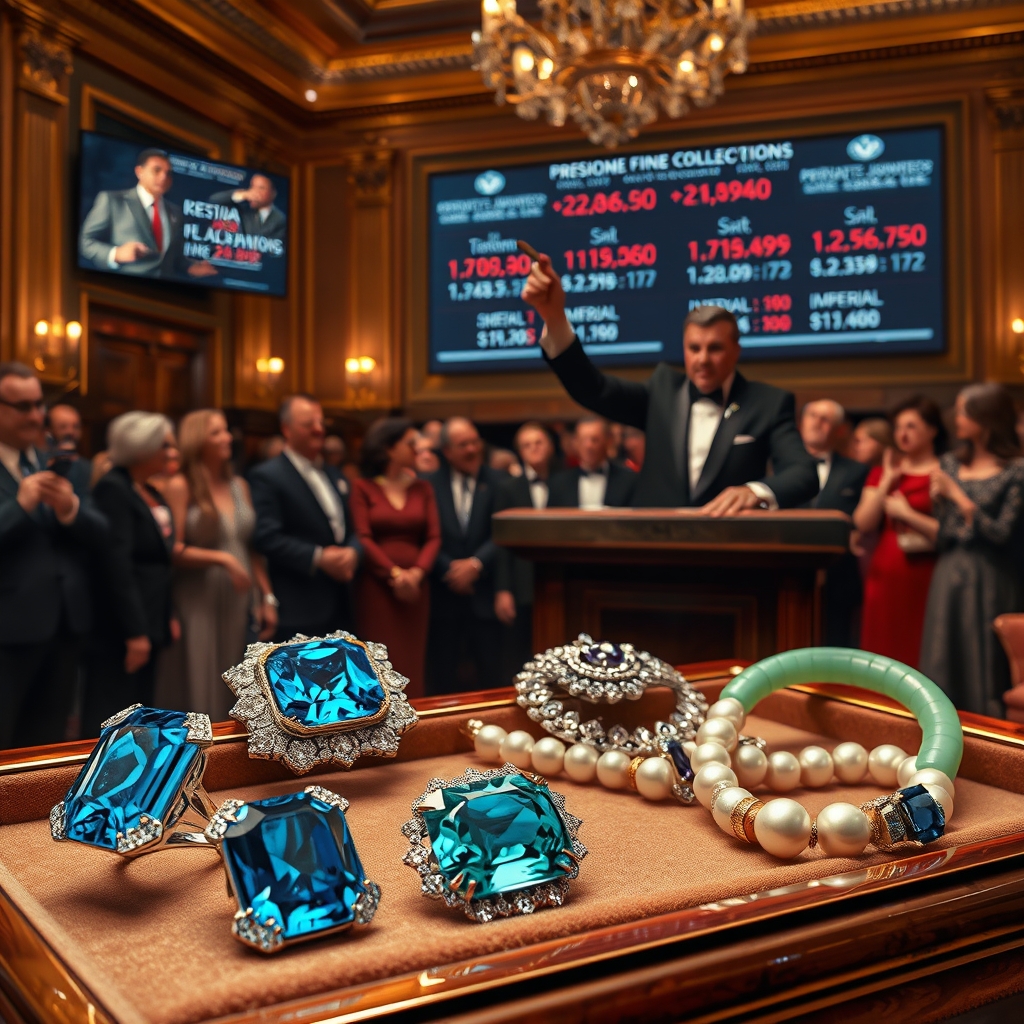
The world of fine jewelry auctions is not merely a marketplace—it is a theater where history, artistry, and human desire converge under the spotlight of the gavel. At the heart of this spectacle lie prestigious private collections, those carefully curated assemblages of magnificence that transcend mere ownership to become legacies. These collections do more than command record-breaking hammer prices; they redefine the very essence of what it means to collect, invest, and cherish the rarest treasures of our time.
The Anatomy of a Legendary Collection
What transforms a grouping of exquisite pieces into a collection of legend? It is not merely the sum of its parts, though the presence of rare colored diamonds, antique royal jewels, or signed Art Deco masterpieces certainly elevates its stature. The magic lies in the narrative—a story woven through provenance, rarity, and the discerning eye of its curator. Consider the collections that have left an indelible mark on auction history: the Duchess of Windsor’s jewels, the Elizabeth Taylor estate, or the recent dispersal of the Collection of a European Noble Family. Each of these was not just a sale but a cultural event, a moment where the past and present collided in a dazzling display of opulence.
Provenance, in particular, acts as the invisible thread that binds these collections to their illustrious pasts. A sapphire once belonging to a maharaja, a pearl necklace worn by a Hollywood icon, or a diamond mined from a long-forgotten deposit—these details do not merely add value; they infuse each piece with a soul. Auction houses understand this alchemy well, often dedicating entire catalogs to the stories behind the jewels, turning a simple transaction into an emotional journey for bidders.
The Alchemy of Rarity and Demand
In the rarefied air of high jewelry auctions, rarity is the currency that never depreciates. Investment-grade diamonds, natural pearl treasures, and imperial jadeite are not just sought after for their beauty but for their scarcity. The laws of supply and demand take on a near-mystical quality when applied to these treasures. A 10-carat vivid blue diamond, for instance, is not merely a gemstone; it is a once-in-a-generation phenomenon, a geological marvel that may never surface again. When such a stone appears at auction, it does not just attract collectors—it draws the attention of the world.
Yet rarity alone does not guarantee success. The most coveted collections are those that strike a delicate balance between the extraordinary and the attainable, the historic and the wearable. A necklace of Burmese rubies might dazzle, but if it lacks the provenance or craftsmanship to resonate with modern tastes, it risks becoming a relic rather than a prize. The most astute collectors—and the auction houses that serve them—understand that the true value of a piece lies in its ability to transcend time, to be as relevant in a contemporary setting as it was in its era of creation.
The Role of Auction Houses as Curators
Auction houses are no longer mere facilitators of sales; they have evolved into master storytellers, shaping the narrative around each collection with the precision of a novelist. The catalogs they produce are works of art in their own right, blending scholarly research with lavish photography to create an immersive experience. When Sotheby’s or Christie’s unveils a private collection, they do so with the fanfare of a museum exhibition, complete with previews in global capitals, private viewings for VIP clients, and digital campaigns that reach millions.
This curatorial approach extends to the selection of pieces within a collection. A truly remarkable sale is not a haphazard assembly of valuables but a carefully orchestrated symphony, where each jewel complements the next. A Cartier tiara might be paired with a Van Cleef & Arpels necklace, not just for their individual brilliance but for the dialogue they create between eras, styles, and craftsmanship. The result is a collection that feels greater than the sum of its parts, a testament to the vision of its original owner and the expertise of the auction house.
The Collector’s Dilemma: Passion vs. Investment
For those who aspire to build their own prestigious private collection, the journey is fraught with questions. Is the goal to acquire pieces of unparalleled beauty, or is it to assemble an investment portfolio that will appreciate over time? The answer, more often than not, lies somewhere in between. The most enduring collections are those born of passion, where each acquisition is driven by a deep, personal connection to the piece. Yet, even the most ardent collector cannot ignore the financial realities of the market.
Certified colored gemstones, for example, have emerged as a favorite among savvy investors, thanks to their stability and potential for growth. A Burmese pigeon’s blood ruby or a Colombian emerald, with its rich history and limited supply, can command prices that rival—or even surpass—those of colorless diamonds. Similarly, vintage signed jewelry from houses like Tiffany & Co., Boucheron, or JAR has seen a surge in demand, as collectors seek out pieces with both artistic merit and a tangible link to the past. The key to navigating this landscape is education: understanding the nuances of gemology, the trends shaping the market, and the stories that give each piece its unique allure.
The Global Stage: Where East Meets West
The geography of fine jewelry auctions has shifted dramatically in recent decades. Once dominated by the salons of London, Paris, and New York, the market now spans the globe, with Hong Kong, Geneva, and Dubai emerging as powerhouse hubs. This expansion has brought new collectors into the fold, each with their own cultural perspectives and aesthetic preferences. Imperial jadeite, for instance, holds a revered place in Chinese culture, where its color and texture are associated with luck, prosperity, and protection. When a piece of imperial jadeite appears at auction in Hong Kong, it is not just a gemstone—it is a cultural artifact, a symbol of heritage that resonates deeply with bidders.
This global exchange has also led to a cross-pollination of styles and tastes. Western collectors are increasingly drawn to the bold, symbolic designs of Asian jewelry, while Eastern buyers are embracing the elegance of Art Deco and the romanticism of Victorian pieces. The result is a market that is more dynamic and diverse than ever before, where a natural pearl necklace might find a new home in Shanghai, and a rare sapphire ring could be acquired by a collector in Riyadh. The auction house, in this context, becomes a bridge between cultures, a place where the universal language of beauty and craftsmanship transcends borders.
The allure of prestigious private collections lies not just in the jewels themselves but in the stories they tell and the futures they shape. Each auction is a chapter in an ongoing narrative, one where the past is preserved, the present is celebrated, and the future is imagined. Whether driven by passion, investment, or a bit of both, collectors who engage with these treasures are not merely acquiring objects—they are becoming part of a legacy that will endure long after the gavel falls. In a world where so much is fleeting, the timeless brilliance of fine jewelry offers a rare and precious constant, a reminder that true value is not measured in carats alone but in the memories, emotions, and histories that each piece carries with it.