The Art of Rarity: How Certified Colored Gemstones Redefine Luxury Auctions
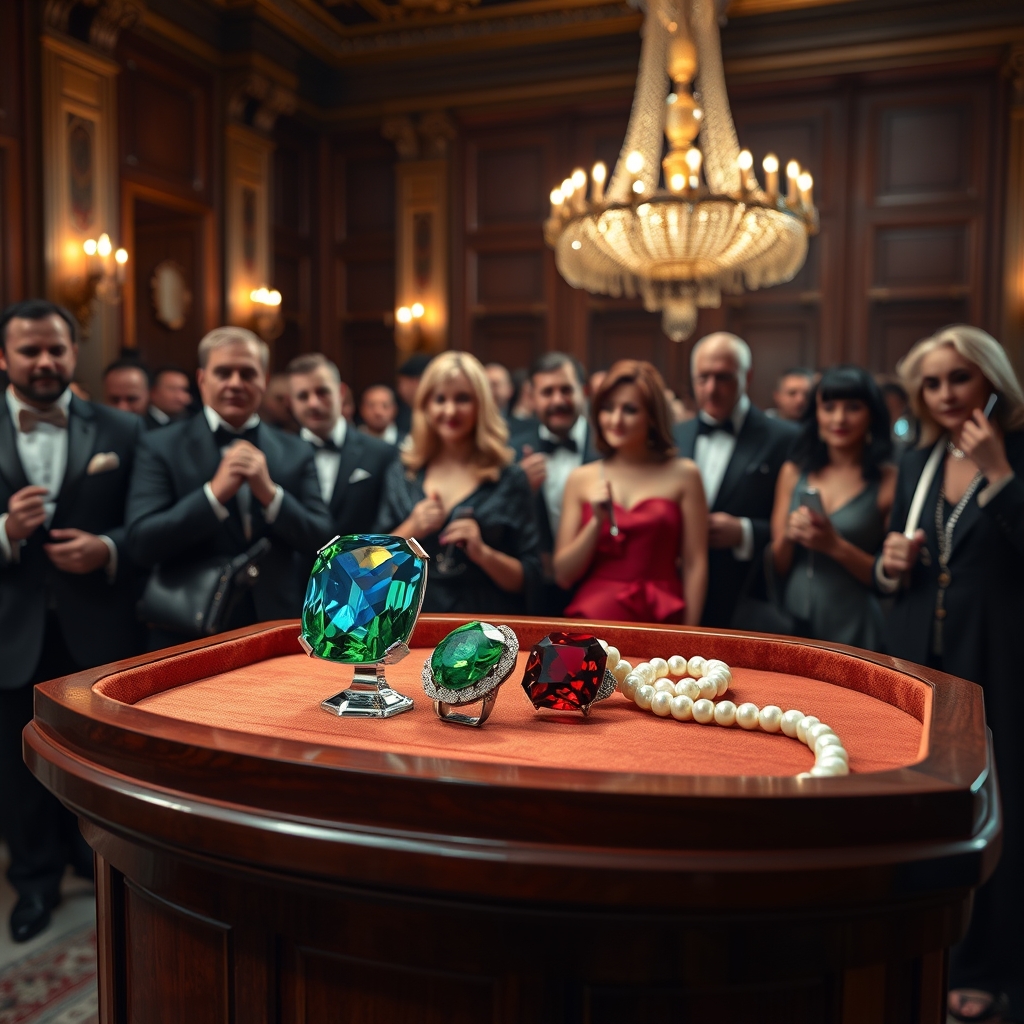
In the rarefied world of high-stakes auctions, few categories command the same reverence as certified colored gemstones. These are not merely stones; they are fragments of the earth’s most exquisite artistry, refined over millennia into objects of desire that transcend time and trends. From the velvety depths of a Burmese ruby to the electric brilliance of a Colombian emerald, colored gemstones have long been the silent protagonists in the drama of luxury sales, where provenance, rarity, and craftsmanship converge to create moments of bidding frenzy.
The Science and Soul of Certification
What elevates a colored gemstone from a beautiful bauble to an investment-grade masterpiece? The answer lies in the meticulous process of certification. Institutions like the Gemological Institute of America (GIA) and the American Gemological Laboratories (AGL) serve as the arbiters of authenticity, grading stones based on the four Cs—color, clarity, cut, and carat weight—while also assessing origin, treatment, and historical significance. A certificate is not just a document; it is a passport that validates a gemstone’s journey from mine to market, ensuring its place in the pantheon of collectible treasures.
Take, for instance, the 2015 auction of the “Blue Belle of Asia,” a 392.52-carat sapphire that fetched a staggering $17.3 million at Christie’s Geneva. Its certification revealed not only its Ceylonese origin but also its untreated nature, a rarity in a market where heat treatment is common. Such details transform a gemstone into a legend, making it a coveted prize for collectors who seek more than beauty—they seek stories etched in stone.
The Allure of Imperial Jadeite: A Stone Steeped in Dynasty
No discussion of certified colored gemstones would be complete without mentioning jadeite, the gemstone that has captivated emperors, connoisseurs, and collectors for centuries. Unlike its more common counterpart, nephrite, imperial jadeite is a symphony of color and translucency, with hues ranging from the purest “emerald green” to the rarest “lavender.” The most prized specimens, often sourced from Myanmar’s fabled mines, have been known to command prices per carat that rival—or even surpass—those of diamonds.
The 2014 sale of the “Hutton-Mdivani Necklace” at Sotheby’s Hong Kong is a testament to jadeite’s enduring allure. Comprising 27 beads of the finest imperial jadeite, the necklace sold for $27.44 million, setting a world record for a jadeite jewel. What made this piece extraordinary was not just its size or color but its provenance—it was once owned by Woolworth heiress Barbara Hutton, a woman whose name is synonymous with mid-20th-century glamour. Such historical resonance is the invisible thread that weaves a gemstone into the fabric of cultural legacy.
Art Deco and the Golden Age of Gemstones
The Art Deco era, with its bold geometries and lavish excess, produced some of the most iconic jewelry designs in history. Signed pieces from houses like Cartier, Van Cleef & Arpels, and Boucheron are not just adornments; they are wearable art, often featuring certified colored gemstones that serve as the centerpiece of their design. The 2021 sale of a Cartier Art Deco sapphire and diamond bracelet at Sotheby’s Paris is a prime example. The bracelet, with its intricate platinum work and a 42.62-carat Kashmir sapphire, sold for $3.4 million, far exceeding its estimate. What made it exceptional was not just its craftsmanship but the stone’s origin—Kashmir sapphires, known for their cornflower blue hue, are among the rarest and most sought-after gemstones in the world.
For collectors, Art Deco pieces offer a dual appeal: the allure of vintage design and the security of certified gemstones. These jewels are not just relics of a bygone era; they are timeless investments that appreciate in both cultural and monetary value. The market for such pieces has seen a steady rise, with auction houses reporting record sales for signed jewelry that combines historical provenance with gemological excellence.
Natural Pearls: The Organic Marvels of the Auction World
In an age where lab-grown diamonds and synthetic gemstones dominate the conversation, natural pearls remain the ultimate symbol of organic rarity. Unlike their cultured counterparts, natural pearls form without human intervention, making them exceedingly rare and highly prized. The 2018 sale of the “La Peregrina,” a pear-shaped pearl once owned by Spanish royalty, at Sotheby’s New York is a case in point. The pearl, which sold for $11.8 million, was not just a gemstone but a piece of history, having been passed down through generations of European monarchs.
What makes natural pearls so compelling is their unpredictability. Each pearl is a unique creation of nature, with its shape, size, and luster determined by the whims of the ocean. Their certification process is equally rigorous, with gemologists assessing factors like nacre thickness, surface quality, and origin. For collectors, natural pearls are more than just jewelry; they are tangible connections to the natural world, a reminder of the earth’s capacity to create beauty in the most unexpected places.
The Future of Colored Gemstones in Auctions
As the luxury market evolves, so too does the demand for certified colored gemstones. Auction houses are increasingly curating sales that highlight not just individual gems but entire collections, offering buyers a chance to acquire pieces with shared provenance or thematic coherence. The 2022 “Magnificent Jewels” sale at Christie’s Geneva, for example, featured a collection of Burmese rubies from the estate of a European aristocrat, each stone accompanied by a GIA certificate. The sale realized over $50 million, underscoring the market’s appetite for gemstones that combine rarity, history, and certification.
For those who view gemstones as more than mere adornments, the auction block is where passion meets precision. It is where the romance of history intersects with the rigor of science, where every bid is a testament to the enduring allure of rarity. In a world where mass production has diluted the meaning of luxury, certified colored gemstones stand as beacons of authenticity, their value not just in their beauty but in the stories they carry—the stories of the earth, of craftsmanship, and of the human desire to possess something truly extraordinary.