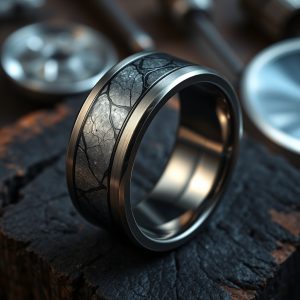
Celestial Forged: The Timeless Symphony of Meteorite and Titanium in Modern Jewelry Design
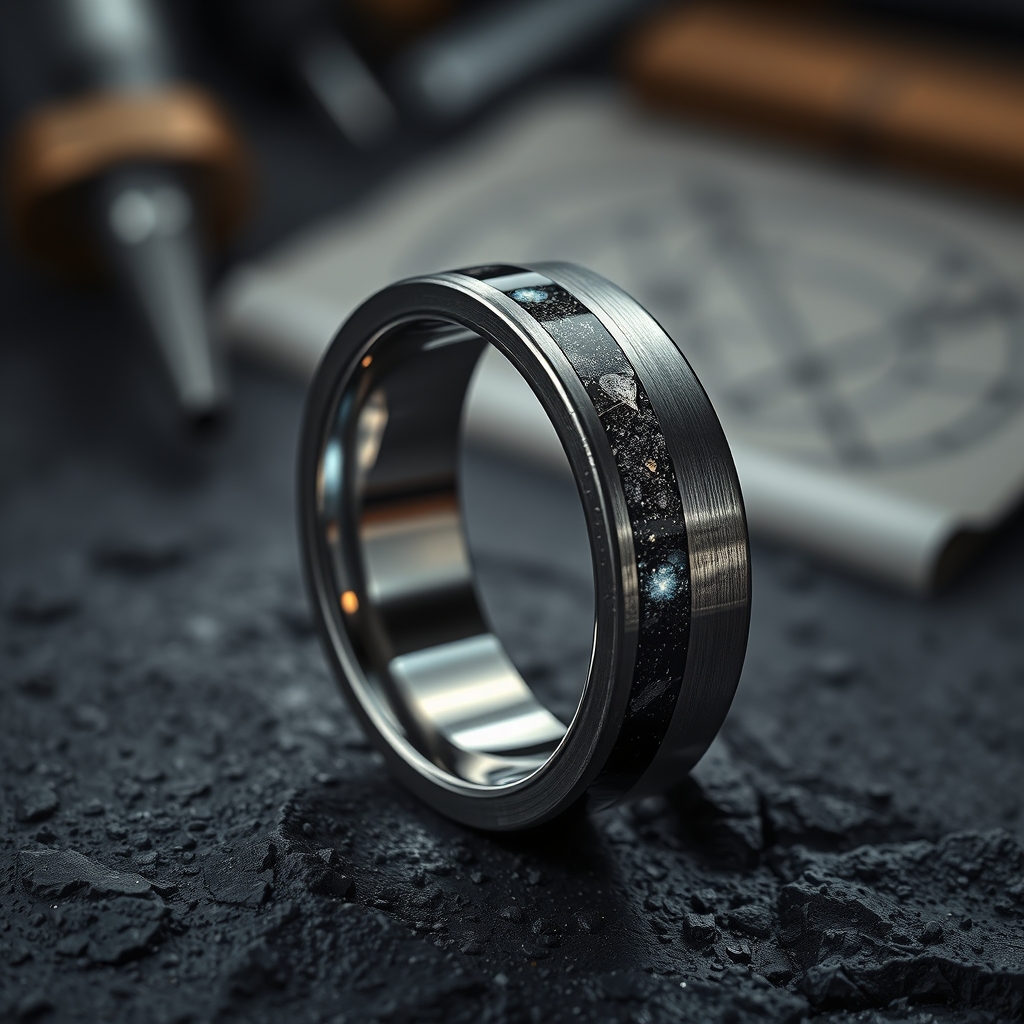
In the vast expanse of the cosmos, where stars are born and celestial bodies collide, lies the origin of some of the most extraordinary materials known to humanity. These materials, forged in the heart of supernovas and scattered across the void, have found their way into the hands of master jewelers, giving rise to a new era of adornment that marries the mystique of the universe with the precision of modern craftsmanship. Among these celestial treasures, meteorite and aerospace-grade titanium stand out as the vanguard of a revolution in jewelry design, offering unparalleled beauty, durability, and a story that transcends time.
The Cosmic Legacy of Meteorite
Meteorites, fragments of asteroids and other celestial bodies that have survived their fiery descent through Earth’s atmosphere, are more than mere rocks—they are time capsules from the dawn of the solar system. The most sought-after meteorites for jewelry, such as the Gibeon and Muonionalusta, originate from the core of ancient planets that were shattered billions of years ago. Their intricate Widmanstätten patterns, a geometric marvel formed by the slow cooling of nickel-iron alloys in zero gravity, are as unique as fingerprints, ensuring that no two meteorite inlay rings or bands are ever alike.
Incorporating meteorite into jewelry is a meticulous process that demands both scientific precision and artistic vision. The meteorite must first be stabilized to prevent oxidation, a process that involves careful cleaning and treatment with protective coatings. Once prepared, the meteorite is sliced into thin, delicate sheets, each revealing the mesmerizing patterns that have captivated humans for centuries. These sheets are then inlaid into rings, cuffs, and other pieces, often paired with exotic metals like titanium to create a striking contrast between the dark, otherworldly meteorite and the sleek, modern metal.
The Unyielding Strength of Aerospace-Grade Titanium
While meteorite brings the cosmos to life, aerospace-grade titanium provides the foundation for jewelry that is as resilient as it is refined. Titanium, a metal renowned for its strength-to-weight ratio, is a staple in the aerospace industry, used in everything from aircraft frames to spacecraft components. This same metal, when crafted into jewelry, offers a lightweight yet virtually indestructible alternative to traditional materials like gold or platinum. Its hypoallergenic properties make it an ideal choice for those with sensitive skin, while its resistance to corrosion ensures that it retains its luster for a lifetime.
The versatility of titanium is one of its greatest assets. It can be anodized to produce a spectrum of vibrant colors, from deep blues and purples to rich blacks and golds, allowing for endless creative possibilities. Techniques like hammering, brushing, and texturing can further enhance its visual appeal, giving each piece a distinct character. Whether it’s a brushed metal finish that exudes understated elegance or a hammered titanium band that captures the raw beauty of the metal, titanium jewelry is a testament to the fusion of innovation and artistry.
The Art of Exotic Inlays: Where Meteorite Meets Titanium
The true magic of contemporary jewelry design lies in the fusion of meteorite and titanium, a combination that elevates each material’s unique qualities while creating something entirely new. Custom meteorite rings, for instance, often feature a meteorite inlay set within a titanium band, the dark, cosmic patterns of the meteorite contrasting sharply with the smooth, metallic sheen of the titanium. This juxtaposition creates a visual narrative that speaks to the duality of strength and fragility, eternity and impermanence.
Exotic inlay bands take this concept further by incorporating other rare materials, such as Damascus steel or rare earth metals, into the design. Damascus steel, with its distinctive water-like patterns, adds a layer of historical intrigue, while rare earth metals like tungsten or cobalt bring their own unique properties to the table. The result is a piece of jewelry that is not just an accessory, but a conversation starter—a wearable work of art that tells a story of cosmic origins and human ingenuity.
Beyond the Ordinary: The Rise of Textured and Lightweight Designs
As the demand for unique, personalized jewelry grows, so too does the experimentation with textures and finishes. Textured metal bands, such as those with a hammered or brushed finish, offer a tactile experience that sets them apart from traditional smooth designs. These textures not only enhance the visual appeal of the jewelry but also provide a subtle grip, making them practical for everyday wear. Lightweight titanium jewelry, in particular, is gaining popularity among those who seek comfort without compromising on style. A titanium cuff bracelet, for example, can be both bold and understated, its weightlessness making it ideal for all-day wear.
Anodized titanium takes this customization to the next level, allowing jewelers to create pieces that are as vibrant as they are durable. The anodization process involves passing an electric current through the metal, which alters its surface oxide layer and produces a range of colors. This technique is often used to create gradient effects or to highlight specific design elements, such as the edges of a ring or the inlay of a meteorite. The result is a piece of jewelry that is as dynamic as the cosmos itself, shifting in appearance depending on the light and angle.
The Intersection of Science and Artistry
What makes meteorite and titanium jewelry truly extraordinary is the way it bridges the gap between science and art. The process of crafting these pieces requires a deep understanding of metallurgy, chemistry, and engineering, as well as an artist’s eye for detail and design. Jewelers who work with these materials must navigate the challenges of stabilizing meteorite, shaping titanium, and ensuring that each piece is not only beautiful but also structurally sound. This blend of technical expertise and creative vision is what sets celestial jewelry apart from more traditional forms of adornment.
Moreover, the story behind each piece adds an emotional dimension that resonates with wearers. A meteorite inlay ring is not just a ring—it is a fragment of the universe, a piece of history that has traveled billions of miles to find its way to your finger. Similarly, a titanium band is a symbol of human achievement, a testament to our ability to harness the power of innovation to create something both functional and beautiful. Together, these materials create a narrative that is as compelling as the jewelry itself.
The allure of meteorite and titanium jewelry lies in its ability to capture the imagination, to transport the wearer to a place where the boundaries between Earth and the cosmos blur. It is a reminder that beauty is not confined to the familiar, but can be found in the most unexpected of places—whether it’s the heart of a distant planet or the sleek, modern lines of a titanium cuff. As we continue to explore the universe and push the boundaries of what is possible, these celestial materials will undoubtedly play a central role in shaping the future of jewelry design, offering a glimpse into the infinite possibilities that lie beyond our world.