The Gilded Canvas: How Art Deco Estate Finds and Investment-Grade Diamonds Paint the Future of Auction Houses
The world of fine jewelry auctions is a mesmerizing blend of history, artistry, and unparalleled craftsmanship. Among the most coveted treasures that grace the auction block are Art Deco estate finds and investment-grade diamonds, each telling a story of elegance, innovation, and timeless allure. These pieces do not merely represent wealth; they embody the evolution of design, the legacy of craftsmanship, and the enduring fascination with rarity. As auction houses continue to curate collections that bridge the past and present, these gems stand as testaments to the ever-evolving narrative of luxury.
The Renaissance of Art Deco: A Design Revolution
The Art Deco movement, which flourished in the 1920s and 1930s, was a celebration of modernity, geometric precision, and bold aesthetics. This era gave birth to some of the most iconic jewelry designs in history, characterized by symmetrical patterns, vibrant gemstones, and a departure from the organic forms of the preceding Art Nouveau period. Today, Art Deco estate finds are highly sought after, not only for their beauty but for their historical significance. These pieces often feature rare materials such as black onyx, coral, and jade, combined with diamonds and platinum to create striking contrasts that define the era.
Auction houses like Sotheby’s and Christie’s frequently showcase Art Deco masterpieces, drawing collectors who appreciate the movement’s influence on contemporary design. A Cartier Tutti Frutti bracelet, for instance, with its intricate carvings and vibrant sapphires, rubies, and emeralds, can command millions at auction. Such pieces are not just jewelry; they are wearable art, encapsulating the spirit of an age that embraced progress and glamour.
The Provenance Factor: Why History Matters
One of the most compelling aspects of Art Deco jewelry is its historical provenance. A piece once owned by a Hollywood icon, a European aristocrat, or a captain of industry carries with it a narrative that transcends its material value. For example, the Bulgari Art Deco sapphire and diamond necklace worn by Elizabeth Taylor sold for a record-breaking price, not just because of its exquisite craftsmanship, but because of the stories it carried. Provenance adds layers of meaning, transforming a beautiful object into a tangible connection to the past.
Auction houses meticulously document the lineage of such pieces, ensuring that buyers are not only acquiring a work of art but also a slice of history. This emphasis on provenance has elevated the status of Art Deco jewelry, making it a cornerstone of prestigious private collections and a focal point in magnificent jewels auctions.
Investment-Grade Diamonds: The Eternal Asset
While Art Deco jewelry captivates with its historical charm, investment-grade diamonds offer a different kind of allure: the promise of enduring value. These diamonds, often graded as D-F color and internally flawless, are the pinnacle of rarity and desirability. Unlike other luxury assets, diamonds have consistently held their value over time, making them a favored choice for collectors and investors alike. The auction market for these gems is particularly robust, with rare colored diamonds—such as pink, blue, and red—fetching astronomical sums.
The Pink Star diamond, a 59.60-carat fancy vivid pink diamond, sold for over $71 million at a Sotheby’s auction in Hong Kong, setting a world record for any gemstone. Such sales underscore the growing demand for investment-grade diamonds, which are seen as both a safe haven and a status symbol. Auction houses play a crucial role in this market, providing a platform where these extraordinary stones can be showcased and acquired by discerning buyers.
The Science of Rarity: What Makes a Diamond Investment-Grade?
Not all diamonds are created equal, and the criteria for investment-grade diamonds are stringent. The Gemological Institute of America (GIA) grading system evaluates diamonds based on the four Cs: cut, color, clarity, and carat weight. For a diamond to be considered investment-grade, it must excel in all these categories, with particular emphasis on color and clarity. A D-color diamond, which is completely colorless, is the most valuable, while internally flawless diamonds, free from any inclusions, are the rarest.
Beyond the four Cs, factors such as fluorescence, symmetry, and polish also play a role in determining a diamond’s value. Auction houses often collaborate with gemologists to provide detailed certifications, ensuring that buyers have a comprehensive understanding of what they are acquiring. This transparency is essential in a market where a single stone can command a price equivalent to a luxury estate.
The Intersection of Art and Investment
The allure of Art Deco estate finds and investment-grade diamonds lies in their dual nature: they are both works of art and financial assets. This intersection is what makes the auction market so dynamic, as collectors are drawn to pieces that offer aesthetic pleasure and potential appreciation. Auction houses have capitalized on this by curating sales that highlight the best of both worlds, such as high jewelry blockbusters that feature a mix of vintage signed jewelry and rare gemstones.
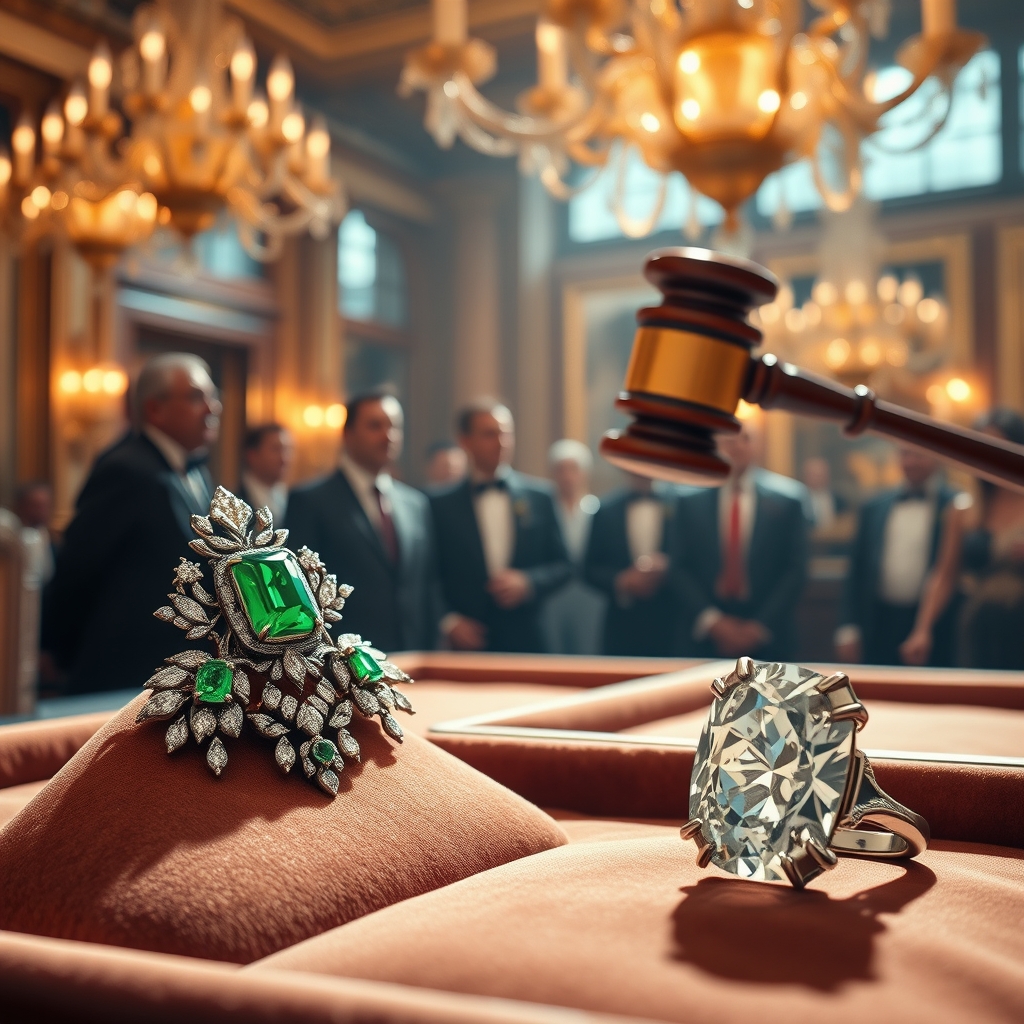
For instance, a recent auction at Christie’s featured a stunning Art Deco diamond and emerald brooch alongside a 10.10-carat fancy vivid blue diamond. The brooch, with its intricate geometric design, appealed to collectors of vintage jewelry, while the diamond attracted investors looking for a rare and valuable asset. Such auctions demonstrate how the worlds of art and investment can coexist, creating a market that is as diverse as it is lucrative.
The Role of Auction Houses in Shaping the Market
Auction houses are not merely facilitators of sales; they are curators of culture, shaping trends and influencing the direction of the luxury market. By spotlighting Art Deco estate finds and investment-grade diamonds, they elevate these categories, drawing attention to their historical and financial significance. Their expertise in marketing, storytelling, and valuation ensures that each piece is presented in its best light, appealing to a global audience of collectors, investors, and enthusiasts.
Moreover, auction houses have embraced digital innovation, offering online bidding platforms that make it easier than ever to participate in sales. This accessibility has broadened the market, attracting new buyers who may not have previously engaged with the world of fine jewelry auctions. As a result, the demand for rare and exceptional pieces continues to grow, driving prices to new heights and reinforcing the status of these treasures as the ultimate symbols of luxury.
The auction stage is a theater where history, art, and commerce converge, and the spotlight often falls on pieces that embody the pinnacle of human achievement. Art Deco estate finds and investment-grade diamonds are more than just objects; they are legacies, passed down through generations and celebrated for their beauty, rarity, and enduring value. As long as there are collectors who appreciate the stories behind these treasures and investors who recognize their potential, the allure of the auction block will remain as captivating as the gems themselves. The future of luxury collecting is not just about owning the finest pieces; it is about preserving the narratives that make them extraordinary, ensuring that their brilliance continues to shine for centuries to come.