The Gilded Echo: How Historical Provenance and Imperial Jadeite Auctions Redefine Luxury Collecting
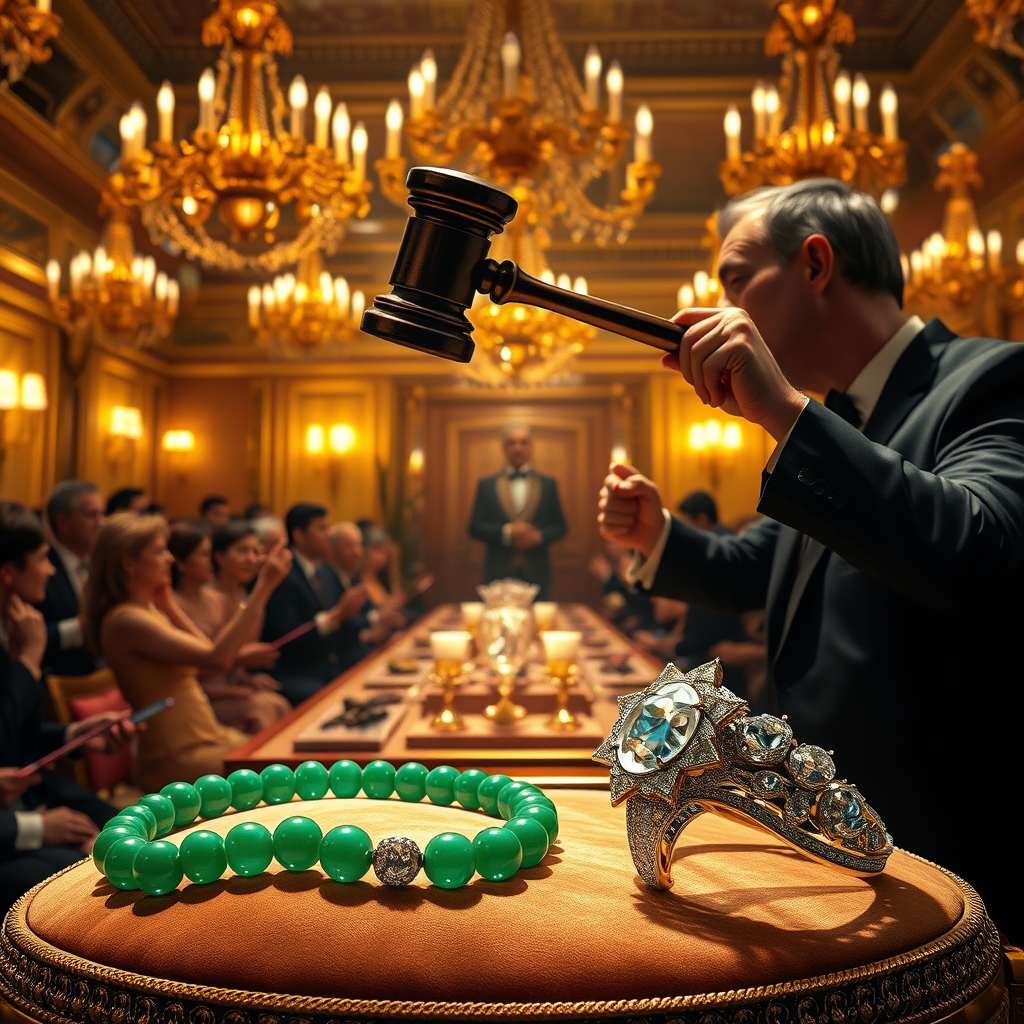
The world of fine jewelry auctions is not merely a marketplace—it is a theater where history, artistry, and desire converge under the gilded glow of the auctioneer’s hammer. Among the most captivating acts in this grand performance are the sales of pieces with historical provenance gemstones and Imperial Jadeite, where each bid is not just a transaction but a continuation of a legacy. These treasures, steeped in the stories of empires, dynasties, and legendary figures, transcend their material value to become symbols of cultural heritage and timeless elegance.
The Weight of History in Every Carat
What transforms a gemstone from a mere mineral into an object of obsession? The answer lies in its provenance—the documented journey of its ownership, craftsmanship, and the hands it has passed through. A rare sapphire once adorning the turban of an Ottoman sultan, or a natural pearl plucked from the depths of the Persian Gulf for a European monarch, carries with it the whispers of centuries. Auction houses like Sotheby’s and Christie’s have mastered the art of curating these narratives, turning each piece into a chapter of human history.
Consider the 2018 sale of the Winston Blue, a flawless 13.22-carat blue diamond that fetched $23.8 million. Its allure was not just in its size or color but in its association with Harry Winston, the legendary jeweler who once owned it. Similarly, the Bulgari Blue, a 10.95-carat diamond ring, sold for $15.7 million in 2010, its value amplified by its connection to the iconic Italian maison. These are not just stones; they are artifacts of human ambition, creativity, and power.
Imperial Jadeite: The Stone of Emperors
No gemstone embodies the mystique of historical provenance quite like Imperial Jadeite. Revered in Chinese culture for over a millennium, jadeite was not merely a decorative stone but a symbol of virtue, status, and divine favor. The finest examples, with their ethereal emerald-green hue and silky translucency, were reserved for emperors, scholars, and the elite. Today, these pieces command astronomical prices at auction, with collectors vying for the chance to own a fragment of imperial splendor.
The record for the most expensive jadeite jewelry ever sold at auction was set in 2014, when a Cartier-designed necklace featuring a 152.76-carat jadeite bead sold for $27.44 million at Sotheby’s Hong Kong. The piece, known as the Hutton-Mdivani Necklace, was once owned by Woolworth heiress Barbara Hutton and later by the Mdivani family, adding layers of historical intrigue to its already legendary status. Such sales underscore how Imperial Jadeite auctions are not just about the stone’s beauty but its ability to evoke the grandeur of ancient dynasties.
The Alchemy of Rarity and Craftsmanship
While provenance lends a gemstone its soul, it is the marriage of rarity and craftsmanship that elevates it to the realm of the extraordinary. Fine estate jewelry from the Art Deco era, for instance, is prized not only for its age but for the unparalleled skill of its makers. Houses like Van Cleef & Arpels, Cartier, and Tiffany & Co. produced pieces that were not just accessories but wearable art, blending geometric precision with opulent materials.
A standout example is the Tiffany Yellow Diamond, one of the largest yellow diamonds ever discovered. Though not for sale, its presence in auctions and exhibitions serves as a reminder of how investment-grade diamonds and rare colored stones can become cultural touchstones. Similarly, the Graff Pink, a 24.78-carat fancy intense pink diamond, sold for $46 million in 2010, setting a world record for the most expensive single jewel ever sold at auction. Its value was a testament to both its rarity and the flawless craftsmanship of its setting.
The Modern Collector: Custodian of Legacy
Today’s collectors are not merely buyers; they are custodians of history. The rise of prestigious private collections has shifted the dynamics of the auction world, with individuals and institutions alike seeking to preserve these treasures for future generations. The 2021 sale of the Mackay Emerald Necklace, a 167.97-carat Colombian emerald set in platinum and diamonds by Cartier, exemplified this trend. Originally owned by the wife of a copper magnate, the necklace sold for $6.5 million, its value rooted as much in its storied past as in its breathtaking beauty.
This shift has also given rise to a new wave of connoisseurship, where buyers are increasingly educated about the nuances of gemology, design, and historical context. Auction houses now offer detailed catalogs, expert appraisals, and even virtual reality experiences to immerse potential bidders in the story behind each piece. The result is a more discerning market, where certified colored gemstones and vintage signed jewelry are evaluated not just for their aesthetics but for their place in the tapestry of human achievement.
The Future of Luxury Auctions: Where History Meets Innovation
As the world of luxury auctions evolves, so too does the interplay between tradition and innovation. The growing interest in collectible designer archives—such as the archives of JAR (Joel Arthur Rosenthal) or Hemmerle—reflects a desire for pieces that are not just beautiful but intellectually stimulating. These designers push the boundaries of conventional jewelry, incorporating unconventional materials and avant-garde techniques to create pieces that are as thought-provoking as they are exquisite.
Technology, too, is reshaping the auction landscape. Online bidding platforms have democratized access to high jewelry blockbusters, allowing collectors from around the world to participate in real-time. Meanwhile, blockchain technology is being explored as a means to authenticate provenance, ensuring that the stories behind these treasures remain as unassailable as the gems themselves. Yet, for all the advancements, the heart of the auction experience remains unchanged: the thrill of the chase, the drama of the bid, and the moment the gavel falls, sealing a piece of history into new hands.
The allure of Magnificent Jewels Auctions lies in their ability to transform the intangible—history, emotion, legacy—into something tangible, something that can be held, worn, and passed down. Whether it’s a rare colored diamond that once graced the neck of a queen or an Imperial Jadeite bangle that whispered secrets to an empress, these pieces are more than adornments. They are echoes of the past, reverberating through time to remind us that true luxury is not just about what we own, but the stories we become a part of.