
The Gilded Mirage: How Rare Colored Diamonds and Prestigious Private Collections Shape the Illusion of Eternity
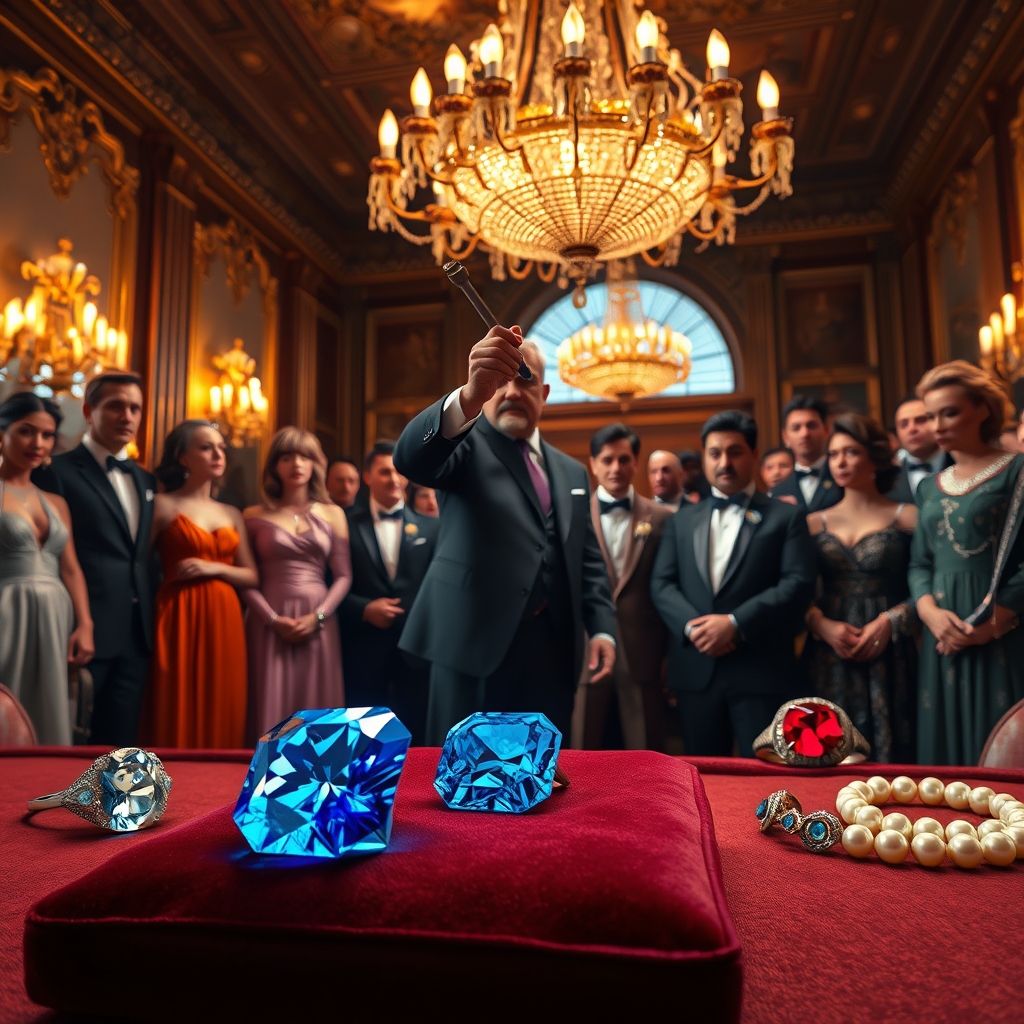
The world of high-stakes auctions is a theater where rarity and desire perform an eternal dance, a spectacle where the past and present collide in a blaze of brilliance. At the heart of this performance lie the most coveted treasures: rare colored diamonds and the prestigious private collections that house them. These are not merely gemstones or jewelry; they are fragments of history, embodiments of craftsmanship, and symbols of human aspiration, all converging under the gavel’s decisive strike.
The Alchemy of Rarity: Why Colored Diamonds Captivate
Colored diamonds are the unicorns of the gemstone world—elusive, mesmerizing, and impossibly rare. Unlike their colorless counterparts, which are graded on the traditional D-to-Z scale, colored diamonds derive their value from the intensity and purity of their hue. A vivid blue diamond, like the legendary Hope Diamond, or a fiery red diamond, such as the Moussaieff Red, can command prices that defy logic, transcending mere monetary value to become cultural icons. Their scarcity is staggering: for every 10,000 colorless diamonds mined, only one will exhibit a natural color, and even fewer will possess the saturation and clarity that collectors crave.
The allure of these gems is not just in their beauty but in their story. Each colored diamond carries the weight of geological epochs, formed under conditions so extreme they seem almost mythical. The presence of trace elements like boron or nitrogen, or the influence of natural radiation, imbues these stones with their distinctive colors, making each one a unique testament to the Earth’s hidden wonders. When such a gem appears at auction, it is not just a transaction—it is a moment where human history intersects with the planet’s ancient narrative.
The Prestige of Private Collections: Where Legacy Meets Legacy
Prestigious private collections are the lifeblood of the auction world, offering a glimpse into the tastes, passions, and legacies of those who assembled them. These collections are often the result of decades—or even centuries—of discerning curation, where each piece is chosen not just for its beauty but for its ability to tell a story. Whether it’s the estate of a royal dynasty, the personal trove of a Hollywood icon, or the meticulously gathered holdings of a connoisseur, these collections carry an aura of exclusivity that transcends the individual items within them.
Take, for example, the sale of the Duchess of Windsor’s jewelry collection. The pieces were not just exquisite examples of mid-20th-century craftsmanship; they were artifacts of a love story that captivated the world. The provenance of each item—its connection to the Duke and Duchess—elevated the collection from mere jewelry to historical relics, fetching prices that reflected their emotional and cultural significance. Similarly, the auction of Elizabeth Taylor’s jewels was not just a sale of diamonds and emeralds; it was a celebration of a life lived in the spotlight, where each piece carried the imprint of her indomitable spirit.
The Role of Provenance: More Than Just a Backstory
Provenance is the invisible thread that weaves through the auction world, transforming objects into legends. A gemstone’s journey—from its discovery in a remote mine to its place in a royal vault or a celebrity’s collection—adds layers of meaning that amplify its value. Historical provenance, in particular, can turn a beautiful piece of jewelry into a priceless artifact. Consider the auction of Marie Antoinette’s pearl and diamond pendant, which sold for over $36 million at Sotheby’s. The gem’s connection to the ill-fated queen, its survival through the French Revolution, and its eventual rediscovery in the 20th century made it more than a piece of jewelry; it was a tangible link to one of history’s most dramatic eras.
For collectors, provenance is not just about authenticity; it’s about owning a piece of history. It’s the difference between a diamond and a diamond that once graced the neck of a queen, or a sapphire and a sapphire that was worn by a screen legend. In the auction world, these stories are currency, and the most compelling narratives command the highest bids.
The Auction House as Storyteller
Auction houses are not merely facilitators of sales; they are storytellers, curators of desire, and architects of legacy. The most successful auctions are those that frame their offerings not as mere objects but as chapters in a larger narrative. Whether it’s the unveiling of a rare colored diamond with a backstory that reads like a novel or the dispersal of a private collection that has been hidden from public view for generations, the auction house’s role is to create a sense of urgency, exclusivity, and emotional resonance.
Consider the sale of the Pink Star diamond, a 59.60-carat fancy vivid pink diamond that sold for $71.2 million at Sotheby’s Hong Kong. The auction house didn’t just present a diamond; they presented a masterpiece, a gem so rare that it was almost unimaginable. The marketing campaign surrounding the sale was a masterclass in storytelling, emphasizing the diamond’s rarity, its flawless grading, and its potential to become one of the most iconic gems in history. The result was a bidding war that captured the world’s attention and set a new benchmark for colored diamonds.
The Future of Collecting: Where Rarity Meets Innovation
As the auction world evolves, so too does the definition of rarity. While traditional treasures like colored diamonds and antique royal jewels will always hold sway, new categories are emerging that reflect the changing tastes of collectors. Investment-grade gemstones, for example, are gaining traction as tangible assets that offer both beauty and financial security. Similarly, luxury watches, once considered niche collectibles, are now commanding record prices at auction, with brands like Patek Philippe and Rolex leading the charge.
Technology is also playing a role in shaping the future of auctions. Online bidding platforms have democratized access to high-end sales, allowing collectors from around the world to participate in real-time. Meanwhile, blockchain technology is being explored as a way to verify provenance and authenticity, adding an extra layer of security and transparency to the auction process. These innovations are not replacing the traditional auction experience; rather, they are enhancing it, making it more accessible, efficient, and secure.
The allure of magnificent jewels and rare treasures lies not just in their beauty or their value but in their ability to transcend time. They are reminders of humanity’s enduring fascination with the extraordinary, with the stories that shape our world, and with the legacy we leave behind. In the auction house, these treasures find their stage, where the past is preserved, the present is celebrated, and the future is imagined in the glow of a single, dazzling gem.