The Gilded Vault: How Imperial Jadeite, Rare Sapphires, and Prestigious Private Collections Command the Auction Elite
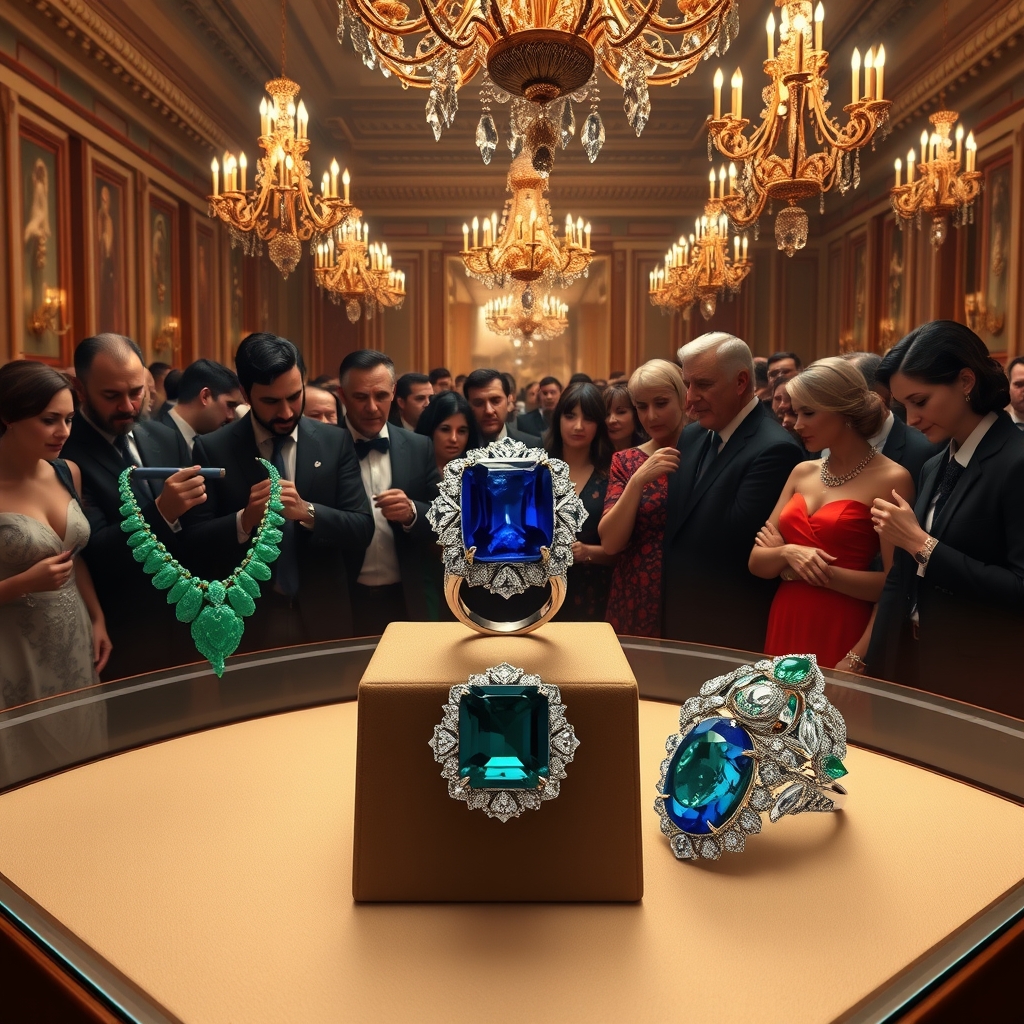
The world of high-stakes auctions is a theater where history, craftsmanship, and rarity converge to create moments of unparalleled drama. Among the most coveted treasures that grace the auction block, few captivate collectors and connoisseurs quite like Imperial Jadeite, rare sapphires, and prestigious private collections. These are not merely gemstones or jewelry; they are artifacts of power, symbols of legacy, and investments that transcend generations. The allure of such pieces lies not only in their monetary value but in the stories they carry—stories of empires, dynasties, and the relentless pursuit of beauty.
The Enigmatic Allure of Imperial Jadeite
Imperial Jadeite, with its mesmerizing emerald-green hue, is more than a gemstone—it is a cultural icon. Revered for centuries in Chinese tradition, jadeite has been associated with purity, wisdom, and protection. The most exquisite specimens, known as Imperial Jadeite, are prized for their intense color, translucency, and flawless texture. These stones are not merely polished; they are sculpted into works of art, often fetching record-breaking prices at auctions.
One of the most legendary examples is the Hutton-Mdivani Necklace, a masterpiece featuring 27 beads of the finest Imperial Jadeite, which sold for a staggering $27.44 million at Sotheby’s Hong Kong in 2014. Such pieces are not just jewelry; they are heirlooms that carry the weight of history. The provenance of Imperial Jadeite often traces back to royal courts, where it was worn by emperors and empresses, adding an intangible value that no modern gemstone can replicate.
The Science and Symbolism Behind the Stone
Jadeite’s rarity is a result of its geological formation. Unlike other gemstones, which are typically found in mines, jadeite forms under extreme pressure and heat deep within the Earth’s crust. The finest specimens are discovered in Myanmar’s Kachin State, where the conditions for their creation are uniquely perfect. The stone’s durability—second only to diamonds—makes it ideal for intricate carvings, a tradition that dates back thousands of years.
In Chinese culture, jadeite is believed to possess protective qualities, often carved into talismans or burial suits for emperors. This deep-rooted symbolism elevates its status beyond mere adornment, transforming it into a vessel of spiritual significance. When such pieces appear at auction, they do not just represent a transaction; they embody a connection to a civilization’s soul.
The Fascination with Rare Sapphires: Beyond the Blue
While blue sapphires have long been celebrated, the auction world is increasingly drawn to their rarer counterparts—padparadscha sapphires, color-change sapphires, and those with extraordinary provenance. The Blue Belle of Asia, a 392.52-carat sapphire, sold for $17.3 million in 2014, setting a world record for the highest price ever paid for a sapphire at auction. But what makes these stones so irresistible?
The Rarity Factor: What Drives the Hammer Price
The value of a sapphire is determined by a combination of factors: color, clarity, cut, and carat weight. However, the most sought-after sapphires possess an elusive quality—origin. Sapphires from Kashmir, with their velvety blue hue and ethereal glow, are the most prized, often commanding prices that dwarf those of diamonds. The Rockefeller Sapphire, a 62.02-carat Kashmir sapphire, sold for $5.5 million in 2018, proving that provenance can elevate a gemstone to legendary status.
Beyond Kashmir, sapphires from Burma (Myanmar) and Sri Lanka are also highly coveted. The padparadscha sapphire, with its delicate pink-orange hue, is one of the rarest varieties, often fetching prices comparable to fine rubies. These stones are not just investments; they are pieces of Earth’s history, formed over millions of years and unearthed in remote corners of the world.
The Power of Prestigious Private Collections
Auction houses thrive on the mystique of private collections, where anonymity and exclusivity fuel desire. When a collection with a storied past comes to market, it is not just the individual pieces that captivate bidders—it is the narrative that accompanies them. The Mackay Emerald Necklace, once owned by American socialite Anna Case, sold for $5.5 million in 2018, not just for its 167.97-carat Colombian emerald but for its place in history as a gift from her husband, Clarence Mackay, a titan of the telegraph industry.
Why Provenance Matters More Than Ever
In an era where authenticity is paramount, the provenance of a piece can make or break its value. A diamond may be flawless, but if it lacks a compelling backstory, it is merely a stone. Conversely, a piece with a documented history—whether it belonged to royalty, a Hollywood icon, or a historical figure—becomes a tangible link to the past. The Duke of Windsor’s Jewels, sold in 1987, fetched prices far beyond their intrinsic value because they were once worn by one of the most infamous figures of the 20th century.
Private collections also offer a glimpse into the tastes of their former owners. The Elizabeth Taylor Collection, auctioned by Christie’s in 2011, generated $115 million, not just for the quality of the jewelry but for the star power of its previous owner. Each piece told a story—of love, loss, and the golden age of Hollywood—making them irresistible to collectors.
The Future of Auction House Masterpieces
As the world of fine jewelry auctions evolves, so too do the tastes of collectors. While diamonds remain a staple, there is a growing appetite for colored gemstones and pieces with historical significance. The rise of investment-grade diamonds and certified colored gemstones reflects a shift toward assets that offer both beauty and financial security. Meanwhile, the digital age has democratized access to auctions, allowing collectors from around the world to participate in real-time bidding wars.
Yet, despite these changes, the core appeal of auction house masterpieces remains unchanged. They are more than objects; they are fragments of history, testaments to human ingenuity, and symbols of enduring beauty. Whether it is a necklace once worn by an empress, a sapphire mined from a long-forgotten deposit, or a jadeite carving that has survived centuries, these treasures continue to captivate because they remind us that some things are truly timeless. The gavel falls, the crowd erupts, and for a moment, the world pauses to witness the transfer of something extraordinary—something that will outlive us all.